His Beatitude Sviatoslav: Ukrainian Families Are Deeply Wounded by War, but Remain a Source of Strength for the Nation
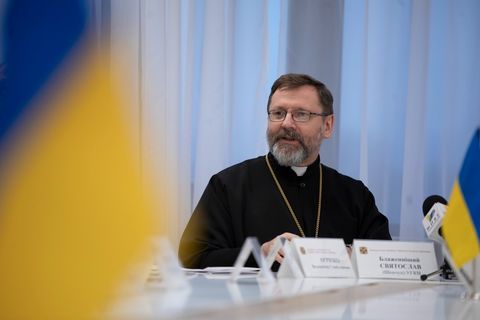
Today, Ukrainian families bear the deep wounds of war—wounds that require healing, attention, and a sense of responsibility on the part of the Church and society. His Beatitude Sviatoslav, Father and Head of the Ukrainian Greek Catholic Church, spoke about this while summarizing the results of 2025 on the program Open Church on Zhyve TV and reflecting on the challenges of family ministry.
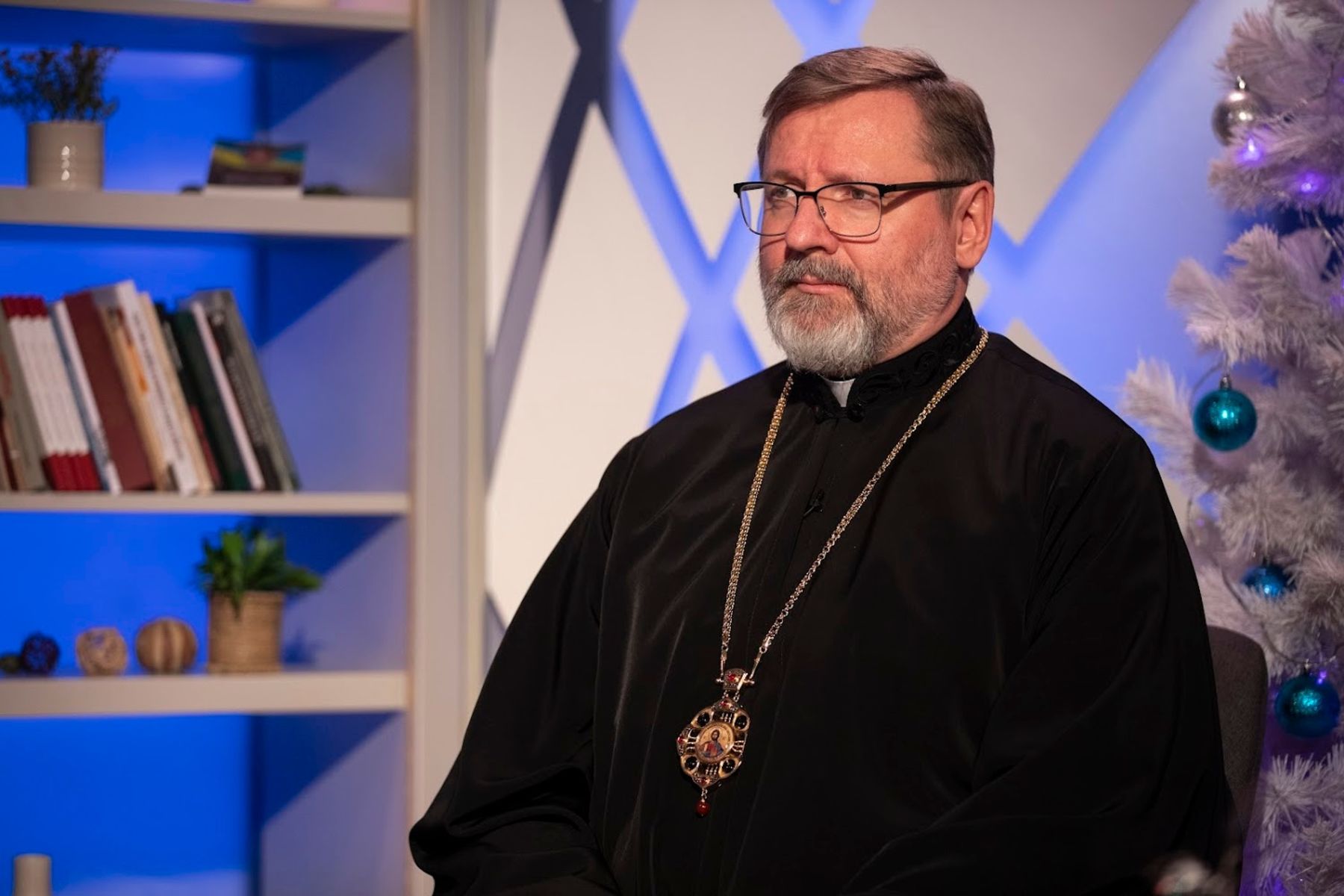
The Head of the Church recalled that the family was one of the key themes of the Synod of Bishops of the Ukrainian Greek Catholic Church, which took place this year in Rome. He emphasized that the family is not only a pastoral issue but also an existential challenge for the Ukrainian people today.
The Primate spoke about the results of a research study presented by military chaplains during a meeting with the Commander-in-Chief of the Armed Forces of Ukraine, General Oleksandr Syrskyi, concerning the phenomenon of Ukrainian soldiers’ resilience. According to him, the family, as an element of Ukrainian society’s resilience, has been particularly evident in the life of the nation, especially this year.
“This study clearly identifies two key factors that shape the resilience of Ukrainian soldiers: faith in God and family. A soldier who believes in God and knows that, despite everything, his family will accept, support, and save him—he can move mountains,” emphasized the Head of the Ukrainian Greek Catholic Church.
At the same time, His Beatitude Sviatoslav noted that the family is one of the most vulnerable segments of Ukrainian society today. “The Ukrainian family has been deeply wounded by the war. And these wounds were not only caused by rockets and bombs. They are much deeper, and we may not yet fully realize how deep they are,” he said.
Speaking about the causes of the crisis, the Head of the UGCC drew attention to the spiritual and cultural challenges of modernity, which undermine the understanding of marriage as a responsible and lasting union.
“This year, Ukrainians gained the ability to get married and divorced online. You can get married without the person you want to build a family with actually being present, and you can just as easily break it all up. This trivializes the institution of the family, and the seriousness of the act and the formation of marital consent, in the canonical sense of the term, are not even considered here,” he noted.
According to His Beatitude Sviatoslav, the Church recognizes the need for a fundamental renewal of approaches to preparing young people for married life: “We must help parents raise children who are capable of starting a family. This requires formation, guidance, and support, because today young people are often afraid to take on the responsibility of loving forever.”
Separately, the Head of the UGCC focused on the dramatic demographic situation in Ukraine, particularly sharing alarmingly low birth rate statistics. While 2.5 children per family are needed to ensure population replacement, the index stood at 2.1 before the full-scale war. “And today, this birth rate index is simply tragic. Demographers estimate 0.6 children per family,” said His Beatitude Sviatoslav.
He explained the reasons for this situation: “Most of our families live in forced separation. That is, men are fighting on the front lines, while women, at best, are elsewhere—perhaps in a safer area of Ukraine or abroad.”
The Head of the UGCC warned against any pressure on families to have children, emphasizing that a child cannot be the result of coercion. “You cannot force anyone to have children, just as you cannot force anyone to love. A child is the fruit of love. We must help create conditions in which Ukrainian families can have children,” he stressed.
His Beatitude Sviatoslav also noted that part of Ukraine’s victory will be that Ukrainian families will not be afraid to have children. Therefore, the task of both the state and the Church is to stand alongside families and create conditions in which they do not fear life or the future.
Thre UGCC Department for Information