The CCEE President Gintaras Grušas: Evil does not have the final word
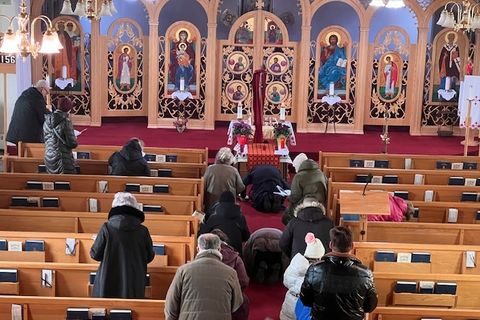
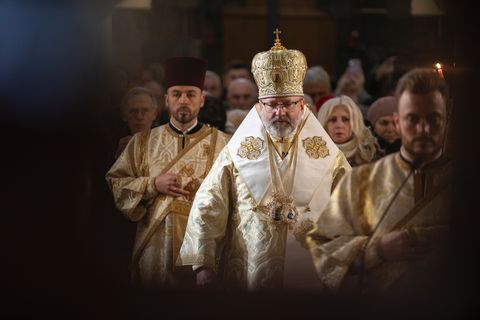
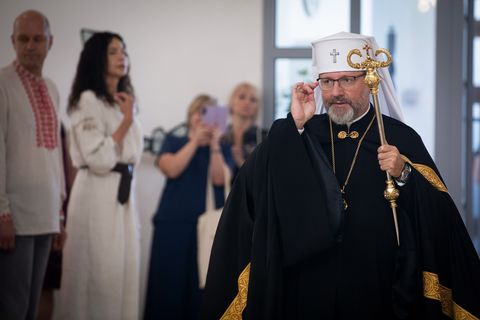
On 9 March, the President of the Council of European Bishops’ Conferences (CCEE), H. E. Msgr. Gintaras GRUŠAS, Archbishop of Vilnius, celebrated Holy Mass for peace at the Shrine of Divine Mercy in Vilnius, Lithuania, as part of the Eucharistic Chain, the CCEE Lenten initiative uniting Churches across Europe in prayer for peace in Ukraine, the Holy Land, and throughout the whole world.
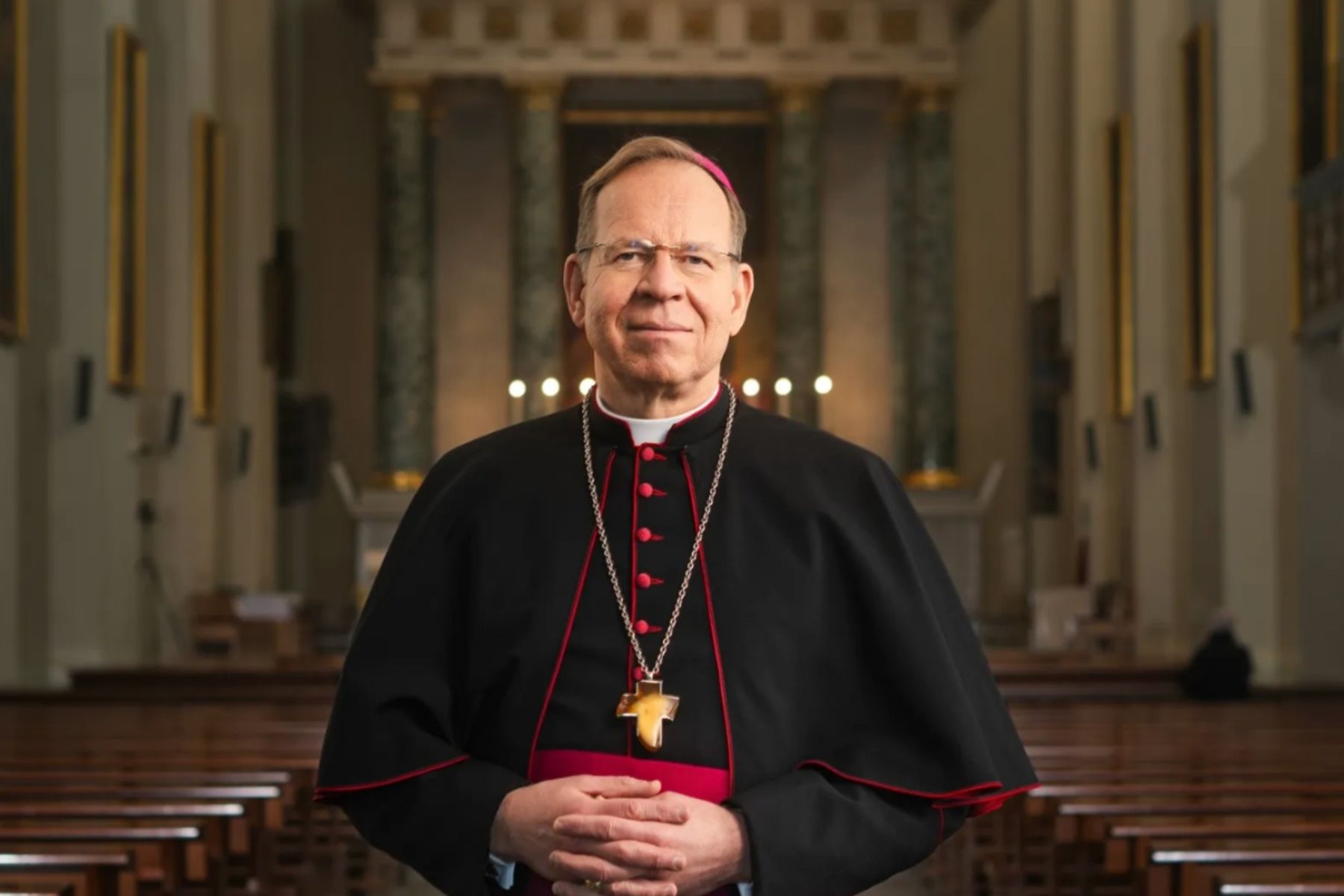
The CCEE President called on Christians across Europe to rediscover the power of prayer and God’s mercy in a world wounded by war. He also invited believers from around the world to gather in Vilnius from 7 to 12 June 2026 for the World Apostolic Congress on Mercy (WACOM 2026).
“Today we have gathered at the table of the Eucharist with a special intention — to pray for peace”. Archbishop Grušas said at the beginning of the Mass, recalling that Lithuania’s prayer forms part of the European lenten initiative of the bishops.
Celebrating the Eucharist in the Shrine of Divine Mercy, the Archbishop emphasized the special significance of Vilnius in the message of Divine Mercy entrusted to Saint Faustina: “Vilnius is the city where, through Saint Faustina, the world heard the message of God’s mercy anew. Here the image of the Merciful Jesus was painted. Here the truth was proclaimed again that evil does not have the final word”.
Reflecting on the biblical account of Naaman, Archbishop Grušas noted that God often works through what appears small or simple. In the same way, prayer for peace may seem insignificant, yet it is essential.
“Prayer for peace may seem too simple. We may be tempted to underestimate it”. At the same time, he acknowledged the importance of political and diplomatic efforts, adding that without prayer “only human effort remains without the light of God”.
Quoting Pope Leo XIV’s Message for the World Day of Peace, he reminded the faithful that “peace is more than just a goal; it is a presence and a journey”.
In the Shrine of Divine Mercy, the Archbishop continued, this message has a particular resonance. As Saint John Paul II taught, Divine Mercy is the force that sets a limit to evil in the world. “Evil is not limitless. Violence is not all-powerful. War is not the ultimate reality. God’s mercy is stronger”.
Turning to the present situation, he acknowledged the suffering caused by ongoing conflicts. “Today the world is again wounded. Ukraine suffers. The Holy Land bleeds. Many conflicts remain in the shadows”. Yet the Archbishop emphasized that prayer is never insignificant.
“Every heart that calls upon God becomes a place where a limit is set to evil. Peace begins with a heart that allows God to purify it”.
Furthermore, he extended an invitation to the upcoming World Apostolic Congress on Mercy, which will take place in Vilnius from 7 to 12 June 2026 under the motto “Building the City of Mercy”. He noted that the gathering will bring believers from around the world to the Lithuanian capital to reflect more deeply on the meaning of God’s mercy and to join in prayer for mercy for humanity and for the whole world.
Archbishop Grušas concluded expressing hope that the Eucharistic Chain of prayer across Europe, together with the prayers offered during the upcoming congress, will help bring spiritual renewal and peace to a wounded world. “May the mercy of God, which sets a limit to evil, heal the wounds of the world today”.
Consilium Conferentiarum Episcoporum Europae